How I Teach Winter ESL Lessons: Snow Science, Vocabulary, Writing & MLK Activities That Work
Who doesn’t love snow?
Kids are naturally fascinated by it. They wonder why it falls, how it forms, and why every snowflake looks different. In my ESL classroom, snow instantly sparks curiosity—and curiosity leads to questions, conversation, and rich language use.

Disclaimer: In this blog, the terms ESL students (English as a Second Language), ELLs (English Language Learners), and ML (Multilingual Learners) are used interchangeably. While “Multilingual Learners” is becoming the more widely accepted term, “ESL students” and “English Language Learners” are still commonly used in various contexts. My aim is to be inclusive and clear to all readers, regardless of the terminology they are familiar with.
I lean into that excitement. Instead of treating winter as just a theme, I use students’ natural curiosity about snow to launch meaningful discussions, academic vocabulary, and content learning. When students are genuinely interested, they are more willing to talk, listen, read, and write—even in a new language.
That’s why January is the perfect time to teach interdisciplinary ESL lessons that combine winter science, literacy, and social studies. Below, I’ll walk you through exactly how I use snow science and Martin Luther King Jr. activities to build vocabulary, comprehension, and confidence in my ESL classroom.
Check out my blog post about teaching thematically and integrating content areas here (science) and here (social studies).
How I Teach Winter Science Vocabulary in ESL Using Snow
When I teach winter science to ESL students, I start with content vocabulary and lots of visuals. We don’t just learn winter words like snow and cold—we learn real science vocabulary that connects to grade-level standards.

Some of the key science vocabulary we learn includes:
- Evaporation
- Condensation
- Precipitation
- Life cycle

I explicitly teach what each word means using picture vocabulary cards, diagrams, gestures, and real-life connections. We talk about how evaporation happens when water warms up, how condensation forms clouds, and how precipitation falls as snow when temperatures are cold.
Teaching ESL Students About Life Cycles Through Snowflakes
Once my students understand what a life cycle is, we apply that concept to snow. We talk about the life cycle of a snowflake, from water vapor in the air to snow falling from the sky and eventually melting back into water.
We do a lot of vocabulary-building activities where students trace, cut, match, paste, or use a word bank and label, depending on their grade and proficiency level. We also do many different concept sorts using Can / Have / Are, the senses, diagrams, and life cycles. These sorts then become our scaffolds for writing about snowflakes—their parts, their life cycle, and how they form. This approach helps students internalize vocabulary while connecting language to science concepts.

We compare snowflake life cycles to other life cycles students may already know, like butterflies or plants (apples). This helps ESL students make connections and reuse familiar academic language in a new context.
Exploring Types of Snowflakes and How Snowflakes Form
Next, we dive deeper into how snowflakes form. We look closely at pictures of different kinds of snowflakes, noticing their shapes, patterns, and symmetry. Students love seeing that no two snowflakes are exactly alike, and this leads to great oral language practice.
We talk, observe, and write about:
- How snowflakes form in clouds
- Why snowflakes have six sides
- How temperature affects snowflake shapes

Reading Nonfiction in ESL: Snowflake Bentley
One of my favorite parts of this unit is reading the nonfiction story about Wilson Alwyn Bentley, also known as Snowflake Bentley. I tell my students how, as a child growing up on a cold farm in Jericho, Vermont, Bentley fell in love with snowflakes.

We talk about how his curiosity became a passion—and how that passion grew into something bigger. Bentley became the first person to successfully photograph snowflakes, showing the world their unique beauty. This story is powerful for ESL students because it combines science, perseverance, and curiosity.
We read, discuss, and write about Bentley using our picture vocabulary book, visual supports and mini-books, writing crafts connected to the story.
Using Writing Crafts to Support ESL Science Learning
Throughout the unit, my students complete hands-on writing crafts that reinforce vocabulary and content. These crafts help my ESL learners organize information visually and practice academic writing without feeling overwhelmed.
Students create:
- A labeling parts of a snowflake craft
- A snowflake life cycle craft
- A Snowflake Bentley craft
- An All About Snowflakes nonfiction booklet
These projects give students a sense of pride while reinforcing science vocabulary and sentence structure.
How I Teach Martin Luther King Jr. in ESL Classrooms
We celebrate Martin Luther King Jr. Day on January 19, and I know that next week many of you will be talking about Dr. King in your classrooms—during lessons, morning meetings, and class discussions. In my ESL classroom, I’m very intentional about how I teach this topic so students truly understand who he was and why we remember him.

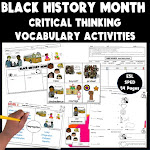
Because MLK’s story includes complex ideas, I start by building essential social studies vocabulary in a clear, student-friendly way. We focus on words like segregation, protest, boycott, equality, and civil rights using visuals, simple explanations, and real-life examples. This gives my ESL students the language they need to participate in meaningful conversations rather than just listening passively.
Making MLK’s Life and Message Accessible for ESL Students
As we read about Martin Luther King Jr., I remind my students that we are learning about someone many teachers and families talk about every January. Using leveled biography texts, I can support students at different English proficiency levels while keeping everyone focused on the same topic.
We use KWL charts and See-Think-Wonder activities to activate background knowledge, ask questions, and reflect on what we’re learning. These routines help my ESL students organize their thinking and practice speaking in complete sentences.

One of my favorite activities is the Quote Sketcher, where students break down MLK’s words into smaller parts and draw what they think each part means. This approach is especially powerful for English learners because it allows them to show understanding visually—even if their writing skills are still developing.
Helping ESL Students Connect to MLK Through Writing and Crafts
To wrap up our learning, my students complete a Martin Luther King Jr. Dream craft and a biography timeline. These activities help reinforce sequencing, comprehension, and key vocabulary while allowing students to reflect on MLK’s message in a creative way.
I also use a Color by Number reading comprehension activity as a low-stress way to check understanding. It keeps students engaged and allows me to assess learning without pressure—something that’s especially important for ESL students.

Teaching Martin Luther King Jr. in January isn’t just about checking a box. It’s about helping students understand his impact, use meaningful social studies vocabulary, and participate in thoughtful classroom conversations—no matter their English level.
January is the perfect time to use your students’ curiosity to spark meaningful ESL learning. Snow naturally leads to questions, discussion, and rich science vocabulary, while learning about Martin Luther King Jr. helps students build important social studies language and understanding.
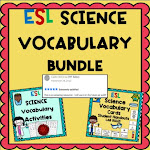
If you’d like to save time and teach these lessons with confidence, I’ve bundled these ready-to-use, scaffolded ESL resources for you here. They’re designed to support English learners, encourage discussion, and make your January lessons engaging and manageable.

With the right tools, winter learning can be powerful—for both you and your students.
Would you like to get more freebies, exclusive deals, ESL tips, crafts, and classroom culture ideas? Sign up for my weekly newsletter!


























0 Comments