ESL Chinese New Year Activities That Build Vocabulary, Literacy, and Cultural Connections
Chinese New Year is a wonderful opportunity to connect classroom learning with students’ cultural backgrounds and experiences. Many multilingual learners either celebrate Lunar New Year at home or are curious about traditions their classmates share, which naturally creates meaningful opportunities for language development. When we bring cultural celebrations into instruction, students feel seen, valued, and more willing to participate — especially in speaking and writing activities. That sense of belonging is powerful for language growth.

If you’re looking for engaging ESL Chinese New Year activities that support vocabulary, phonics, grammar, and writing across proficiency levels, here are some classroom ideas that work beautifully for newcomers through intermediate learners.
Disclaimer: In this blog, the terms ESL students (English as a Second Language), ELLs (English Language Learners), and ML (Multilingual Learners) are used interchangeably. While “Multilingual Learners” is becoming the more widely accepted term, “ESL students” and “English Language Learners” are still commonly used in various contexts. My aim is to be inclusive and clear to all readers, regardless of the terminology they are familiar with.
1. Build Oral Language, Listening, and Vocabulary First
Before moving into reading and writing, it’s important to build background knowledge and vocabulary. Cultural topics like Chinese New Year provide rich visuals and concrete connections that help language stick.
Grab this Chinese New Year Freebie!

One effective approach is using themed images with strategies such as PWIM (Picture Word Inductive Model) or See-Think-Wonder. Students can brainstorm vocabulary related to celebrations — dragon, lantern, family, food, fireworks, red envelope — and practice speaking together. Teaching verb + noun combinations (light lanterns, watch fireworks, give envelopes, eat dumplings) helps students develop more natural language patterns.

After oral practice, transition into shared writing. Model a simple narrative structure:
- Beginning: On Chinese New Year…
- Middle: What happened?
- Ending: How did it finish?
- Feelings: How did people feel?

For newcomers, tracing vocabulary, labeling pictures, and using sentence starters such as I see… or I celebrate… builds confidence before independent writing.
2. Use Sentence Building Centers to Support Grammar and Writing
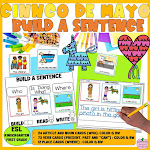
Predictable routines are especially helpful for emerging bilingual students. Sentence-building centers using Chinese New Year vocabulary allow students to practice grammar in a structured, low-stress way.
A simple pattern like Who + What + Where works well:

Visual supports and color-coded cards help students succeed independently while teachers pull small groups for targeted instruction. This is a great time to reinforce:
- Present tense verbs
- Past tense verbs
- Modal verb can
- Prepositions of place
Because the activity is hands-on and culturally meaningful, students stay engaged while practicing essential language skills.
3. Play Chinese New Year Vocabulary Games
Games are one of the most effective ways to reinforce vocabulary, listening, and speaking skills.
Grab this Chinese New Year Freebie!
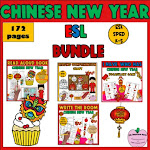
A Chinese New Year vocabulary write the room scavenger hunt works well for mixed proficiency levels. Students search for vocabulary cards around the room and record or trace the words depending on their level. This also supports phonics and beginning sound recognition for younger learners.


4. Integrate Phonics With Cultural Vocabulary
Chinese New Year can also be a meaningful context for phonics instruction, especially for younger learners and ESL newcomers. Activities that combine CVC word practice with themed vocabulary help students connect decoding skills with real language use. For example, students might match pictures to short-vowel words, segment sounds in sound boxes, or complete color-by-code worksheets after decoding words.

Frontloading vocabulary with traceable word cards supports newcomers, while interactive matching games keep phonics practice engaging. Integrating literacy skills with cultural content helps students build both reading confidence and cultural awareness at the same time.
5. Combine Reading, Writing, and Crafts for Deeper Learning
Reading passages paired with crafts create strong engagement because students have a meaningful purpose for reading and writing. Differentiated texts with visuals, vocabulary, and glossaries allow learners at different levels to access the same topic. After reading, students can respond to comprehension questions or complete graphic organizers focusing on key information such as people, traditions, foods, and celebrations.

Crafts like dragons or decorative ornaments can include writing components inside, such as 5W summaries or vocabulary categories. Once assembled, these projects become bulletin board displays that celebrate both learning and culture, which increases student pride and ownership.
6. Lantern Crafts to Build Vocabulary and Cultural Awareness
Lantern crafts are a favorite because they combine creativity, fine motor practice, and cultural learning. Students can color, cut, and assemble lanterns while learning about zodiac animals and related vocabulary. Tracing sheets support handwriting development and reinforce new words, making the activity accessible for younger learners and newcomers. These projects also create beautiful classroom displays, which helps build excitement around the celebration and encourages conversation among students.

7. Wearable Crafts That Encourage Language Use
Wearable crafts like crowns are especially engaging for young learners because they add movement and play to language practice. Students can color, trace vocabulary, and assemble crowns featuring zodiac animals or holiday phrases. Including both “Chinese New Year” and “Lunar New Year” terminology helps represent diverse student backgrounds and fosters inclusive conversations about cultural traditions. Once students wear their creations, they naturally practice speaking as they share what they made and what they learned with classmates.

Chinese New Year isn’t just about crafts and decorations — it’s a powerful opportunity to build vocabulary, phonics, grammar, listening, speaking, and writing skills while honoring students’ cultures and experiences. When lessons connect to real traditions and student identities, engagement increases and language learning becomes more meaningful.
- Cultural celebrations create community.
- Community builds confidence.
- Confidence supports language growth.
And that’s exactly what our multilingual learners need.
If you are looking for a longer, multidisciplinary social studies & literacy unit about China, check out this blog post about holidays around the world: China.

Would you like to get more freebies, exclusive deals, ESL tips, crafts, and classroom culture ideas? Sign up for my weekly newsletter!




























0 Comments