February ESL Activities: Meaningful SEL, Literacy & Engagement for English Language Learners
February is packed with meaningful holidays, rich cultural connections, and so many opportunities to build language through real-life topics. From Groundhog Day (read about it here) and Valentine’s Day to Black History Month and Lunar (Chinese) New Year, February invites conversation, curiosity, and connection.
As always, my goal is to create meaningful language opportunities—not just fun activities, but experiences that help English Language Learners feel seen, supported, and confident using English.
Here’s how I structure my February ESL instruction to balance SEL, literacy, and engagement.
Disclaimer: In this blog, the terms ESL students (English as a Second Language), ELLs (English Language Learners), and ML (Multilingual Learners) are used interchangeably. While “Multilingual Learners” is becoming the more widely accepted term, “ESL students” and “English Language Learners” are still commonly used in various contexts. My aim is to be inclusive and clear to all readers, regardless of the terminology they are familiar with.

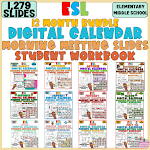
1. Building Excitement with ESL Morning Meeting & Digital Calendars
One of the best ways to start February is by showing students what’s coming. I introduce upcoming holidays directly on our digital calendar and pair them with images and simple discussions:
- What do you know about this holiday?
- Do you celebrate it at home?
- What do you notice?
- Build the calendar together
- Talk about the weather
- Learn holiday-specific vocabulary
- Introduce new sight words
- Do quick SEL check-ins using a feelings chart

These daily routines provide structure and safety, especially for ELLs who thrive on predictability. They also give students low-pressure speaking opportunities every single day.
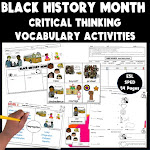
2. Teaching Black History Month in ESL: Rosa Parks & Biography Work
February is Black History Month, and I always want to introduce students to someone they’ll encounter again in social studies. Rosa Parks is a powerful and accessible choice for ESL learners.
We explore her life through:
- KWL charts and See–Think–Wonder to activate background knowledge
- Leveled biography readers so all students can access the same topic

Vocabulary work focused on key academic terms like boycott, protest, civil disobedience, race, racism, and injustice.
Students also:
- Analyze a quote using a Quote Sketcher
- Create a biography timeline
- Complete a color-by-number reading comprehension check
- Finish with a Rosa Parks bus craft

This combination of reading, visuals, writing, and hands-on work allows students to process complex ideas in a developmentally appropriate, language-rich way.
3. Valentine’s Day ESL Activities: Language, Culture & Belonging
Kids love Valentine’s Day—chocolates, hearts, and kind messages make it an easy engagement win. But it’s also a wonderful opportunity for deep language work. We explore Valentine’s Day through:
- Reading and writing activities
- Sentence building and labeling
- PWIM (Picture Word Inductive Model)
- See–Think–Wonder discussions


One of my favorite projects is the Hearts Without Borders craft. Students:
- Draw their country’s flag
- Write about how Valentine’s Day is celebrated in their culture
- Share traditions with classmates
For many of our English Language Learners and their families, this has been a frightening and uncertain time. In moments like these, our classrooms matter more than ever. As educators, we can create spaces where students feel safe, valued, and included.

Even small moments of joy, creativity, and shared learning make a difference. The Hearts Without Borders project helps students feel proud of who they are while building language in a meaningful way. 💛
4. February Phonics for ESL: CVC Practice, Puzzles & Listening Activities
With my younger ELLs and newcomers, February is also a great time to strengthen foundational literacy.
We focus on:
- CVC words through color-by-code phonics activities
- Word–picture puzzles for vocabulary and decoding
- Listening, drawing, and coloring (TPR-style) activities

These activities feel playful, but they’re intentionally designed to support Science of Reading–aligned phonics skills while keeping students motivated.
5. Valentine’s Day ESL Games: Write the Room & “I Have, Who Has?”
February can get wild, especially right before winter break. That’s when games save the day.
I reinforce Valentine’s Day vocabulary with write the Room activities (movement + language = win) and“I Have, Who Has?” vocabulary games. These games: encourage speaking and listening, allow mixed-level groups to participate together, keep students engaged without adding stress. They’re perfect for those days when attention spans are short, but learning still needs to happen.


February gives us so many chances to: build language through culture, support social-emotional learning, and create moments of joy and belonging. When our instruction is intentional, visual, and student-centered, learning feels meaningful—not forced. And that’s exactly what our students deserve.

Would you like to get more freebies, exclusive deals, ESL tips, crafts, and classroom culture ideas? Sign up for my weekly newsletter!






























0 Comments